Cambodian hip-hop has grown from a diaspora-connected movement into one of the country’s most dynamic cultural exports. Khmer artists move confidently between rap, pop, R&B and traditional sound, sampling Cambodia’s musical past while speaking to a young, digitally connected audience.
The profiles below are ordered broadly by current popularity: mainstream audience reach, streaming and YouTube visibility, major live appearances, and prominence in Cambodia’s present-day music conversation. Popularity changes over time, while the historical pioneers near the end remain essential to understanding the scene.
1. VannDa
VannDa has the strongest international profile of any Cambodian rapper. After building momentum through independent releases, he joined Baramey Production and developed a sound that combines detailed Khmer-language flows, contemporary trap production and strong cultural imagery. His 2021 hit “Time to Rise,” featuring the late chapei master Kong Nay, fused modern rap with chapei dang veng and became a landmark for Cambodian popular music. Albums in his Skull series further established his storytelling, ambition and visual identity. Regional collaborations introduced him to audiences across Southeast Asia, and in August 2024 he performed with French band Phoenix at the Paris Olympic Games closing ceremony. Start with “Time to Rise,” “Khmer Blood,” “Bok Kalo” and “Catch Me If You Can.”
Official YouTube: https://www.youtube.com/@VannDaOfficial19000
2. G-Devith
G-Devith, also known as Dit-Way, is one of Cambodia’s most commercially successful rappers, singers, songwriters and producers. He first reached a mass audience through the country’s mainstream production system, then left Rasmey Hang Meas and developed his independent Dit-Way Nation brand. That move helped demonstrate how a Cambodian star could control releases, concerts and a distinct public identity outside a traditional label structure. His catalog ranges from forceful rap performances to romantic pop, dance tracks and reflective storytelling, giving him appeal beyond a strictly hip-hop audience. Elaborate videos, album campaigns and large live shows are central to his impact. Explore his major singles and full-length projects to hear how his rap and pop styles have evolved.
Official YouTube: https://www.youtube.com/@DITWAY
3. Vanthan
Vanthan is a singer, songwriter, producer and multi-instrumentalist whose arrangements are central to the sound of modern Khmer rap. He spent years mastering Cambodian instruments—including roneat, kloy and chapei-related traditions—before applying that knowledge to contemporary recording and composition. He contributed traditional instrumentation to VannDa’s “Time to Rise,” helping the song’s cultural fusion feel integral rather than decorative. As a solo artist, Vanthan pairs warm vocals, rhythmic delivery and polished pop production with recognizably Khmer musical textures. “Khmer Gentlemen,” his collaboration with VannDa, became another of Cambodia’s biggest digital hits and introduced his personality to a much wider audience. Start with “Khmer Gentlemen,” “Point of No Return,” “Ah Pep” and his New Year releases.
Official YouTube: https://www.youtube.com/@vanthan-official
4. Norith
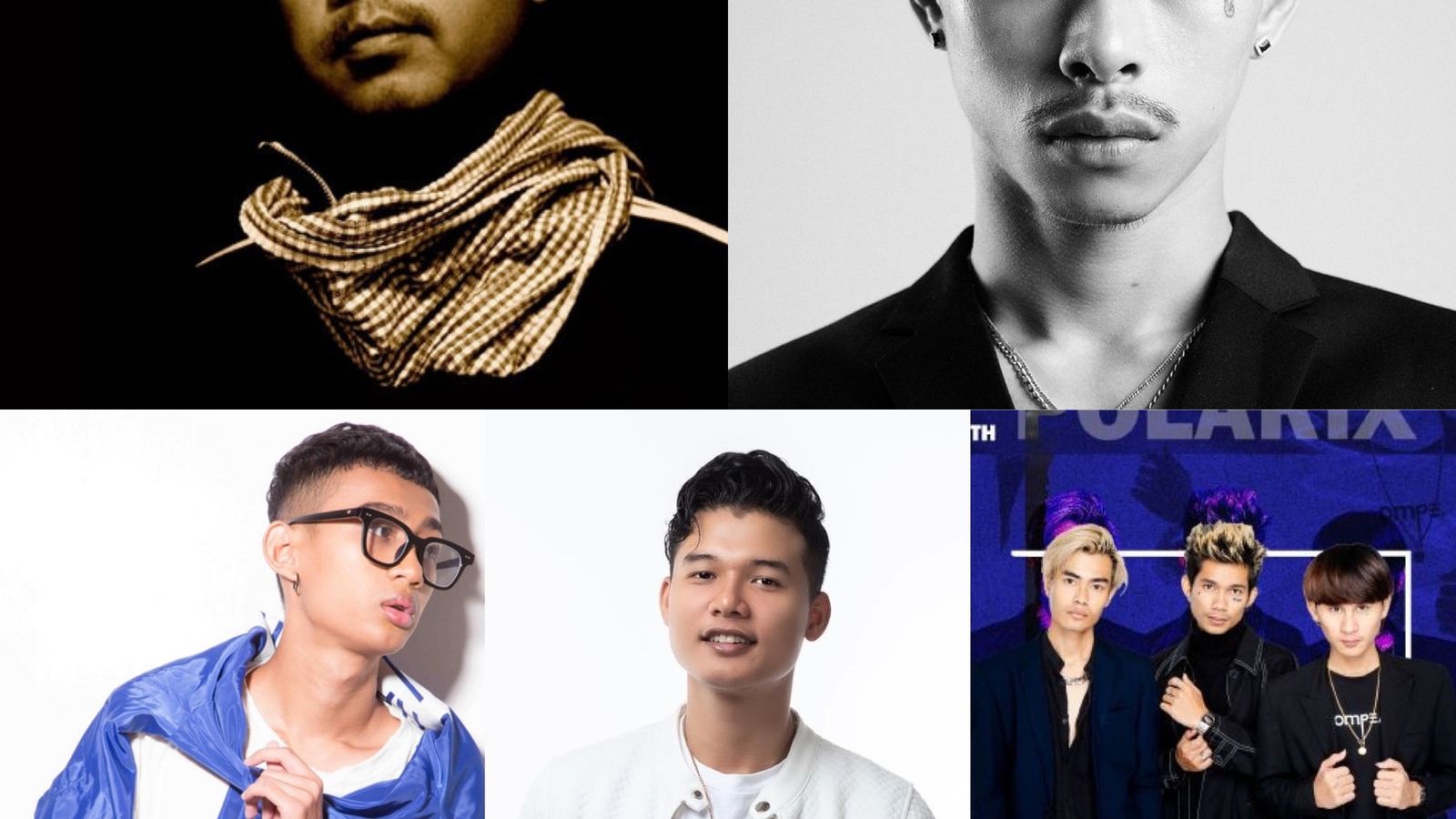
Norith is a singer, dancer and rapper who first gained attention as part of the performance-focused group Polarix before developing a successful solo career. His greatest strength is versatility: he can move from light romantic pop and comedy to dance music and rap without losing a recognizable stage personality. That combination of choreography, humor and accessible songwriting has made him especially visible among younger Cambodian listeners. Norith also served as a coach on the first season of The Rapper Cambodia, where his team included several contestants who went on to build active careers. Collaborations with YuuHai, VannDa, Vanthan and other Baramey artists place him at the center of the label’s current network. Start with “1NA,” “Maybe,” “3AM” and “Ke Or Bong.”
Official YouTube: https://www.youtube.com/@norithofficial
5. YuuHai
YuuHai emerged nationally by winning the first season of The Rapper Cambodia, a victory that displayed his lyricism, composure and adaptability across the program’s different rounds. After joining Baramey Production, he quickly moved beyond the reality-show label with the 2024 ONTHEGO EP. That project and his subsequent singles mix hip-hop, Afro drill, dance music and R&B, while his delivery can shift between tight rap verses, melodic hooks and relaxed conversational phrasing. Collaborations with Norith, Gmengz, Jady and Vanthan have widened his sound and connected him with several corners of Cambodia’s new generation. His progress also shows how televised competitions now provide a development route that did not exist for Cambodia’s early MCs. Start with “Calling My Phone,” “Toxic,” “Hustle” and “Again and Again.”
Official YouTube: https://www.youtube.com/@yuuhaiofficial
6. Vuthea
Vuthea is a singer-songwriter and rapper whose melodic style crosses hip-hop, pop, rock and R&B. He built his audience through youthful songs that balance conversational rap verses with catchy, emotionally direct choruses. His influences include international pop performers as well as Cambodia’s celebrated pre-war singers, and that combination gives his work a familiar yet contemporary character. Vuthea is also an important collaborator: recordings with RuthKo, Vin Vitou and other artists around KlapYaHandz show how naturally he moves between solo pop and collective hip-hop projects. His approachable sound helped rap techniques travel into Cambodia’s wider original-music movement, reaching listeners who might not identify as dedicated hip-hop fans. Start with “Kach Mles Neang,” “Kromom 3 Styles,” “Westside” and his collaborative releases.
Official YouTube: https://www.youtube.com/@VutheaOfficial
7. Kmeng Khmer
Kmeng Khmer is the pop-rap duo of vocalist Kao Ponleu and rapper Chea Socheat. Formed during the mid-2010s, they became closely associated with Cambodia’s original-music movement at a time when locally written songs were gaining new commercial confidence. Ponleu’s emotive singing and Socheat’s conversational Khmer rap create a format that is easy to recognize and accessible across age groups. Their productions often favor memorable melodies and relatable stories over aggressive hip-hop posturing, helping define the melodic C-pop and rap crossover heard throughout today’s Cambodian playlists. Early work connected them with Laura Mam and the developing Baramey ecosystem, while collaborations introduced their style to an even broader audience. Start with “Navanny Is Me” and then explore their albums, acoustic performances and Baramey-era collaborations.
Official YouTube: https://www.youtube.com/channel/UCKFmYdoog9CmS669fQG0iCA
8. La Cima Cartel
Founded by RXTHY and Songha, La Cima Cartel grew from Cambodia’s underground into one of the country’s most recognizable rap collectives. Rather than centering a single front person, the group uses rotating voices, contrasting flows and crew chemistry to keep its releases unpredictable. Trap drums, playful slang, comic situations and village or neighborhood references give many tracks an unmistakably local personality. The collective has also acted as an incubator, giving individual rappers room to develop while benefiting from a shared name and audience. Collaborations with VannDa and other mainstream figures helped bridge underground credibility and large digital audiences without removing the group’s rough-edged energy. Start with “Single Lady in My Village,” “Kou Prank” and the crew’s cypher-style recordings to hear its range of personalities.
Official YouTube: https://www.youtube.com/@LaCimaCartel
9. Polarix
Polarix developed from a dance-focused crew into a broader hip-hop act connecting choreography, rap, fashion and youth culture. That background makes movement and visual presentation fundamental to the group’s identity: songs are designed not only for listening but also for stages, dance videos and high-energy collaborations. Members and associated performers have worked with figures including VannDa, Songha and artists in the Baramey network, giving Polarix a role in the scene that extends beyond its own releases. The group’s evolution also illustrates how Cambodian hip-hop is built by dancers, creative directors and visual performers as well as rappers and producers. Its polished, upbeat style is a useful contrast to the country’s more introspective or politically engaged rap. Start with “Our Day” and the group’s collaborative performance tracks.
Official YouTube: https://www.youtube.com/@PolarixOfficial
10. Pou Khlaing
Rapper, singer, songwriter and producer Pou Khlaing—also written Pu Khlaing—became one of the best-known home-grown hip-hop voices of the 2000s. At a time when Cambodia’s commercial market relied heavily on adapted foreign melodies, his original songs helped prove that recognizably Khmer rap and pop could command a mass audience. His music is rarely confined to one mood: comedy, social observation, romantic hooks and theatrical performance can all appear alongside rapped verses and traditional references. As a writer and producer, he also influenced younger performers and helped establish a professional path for locally created hip-hop before streaming platforms transformed distribution. His career connects Cambodia’s early mainstream rap experiments with the artist-led releases of the present. Start with “Dam Neung Laor,” “Kromom Khmer,” “Mr. KalungBung” and his comeback material.
Official YouTube: https://www.youtube.com/@PouKhlaingKHMER
11. Van Chesda
Van Chesda is a rapper, singer and songwriter who reached a national audience after appearing on Cambodia’s Got Talent. The television exposure introduced his expressive performance style, but his longer career has been built through steady songwriting and releases that move between hip-hop, sentimental pop and energetic dance tracks. He often treats genre as a tool for matching the emotion of a song: vulnerable subjects receive softer melodies, while celebratory material leans toward faster rhythms and playful delivery. That flexibility makes him an accessible entry point for listeners exploring the border between Khmer rap and mainstream pop. Van Chesda has also used his platform to encourage new talent and remains active through self-directed online releases. Start with “Wish,” “Rainy Sky” and “Madizon Mondiza,” then explore his newer singles.
Official YouTube: https://www.youtube.com/@vcds-168
12. Kea Sokun
Siem Reap rapper Kea Sokun is known for unusually direct songs about inequality, corruption, history, labor and national identity. His writing treats rap as civic expression, using plainspoken Khmer lyrics to address subjects that commercial pop often avoids. In 2020, he was convicted of incitement after releasing socially and politically engaged music and served nearly a year in prison; the case drew attention from Cambodian rights organizations and international observers. After his release, he continued recording rather than abandoning those themes. “Workers Blood,” connected to the deadly 2014 Veng Sreng labor crackdown, again showed his willingness to work with politically sensitive material. Kea Sokun’s importance therefore lies not only in musical popularity but in the risks attached to his chosen subjects. Start with “Dey Khmer,” “Workers Blood” and his songs about Siem Reap and Angkor.
Official YouTube: https://www.youtube.com/@KEASOKUN
13. RuthKo
The late Franco-Cambodian rapper RuthKo brought personal lyricism, humor and a distinctly cross-cultural perspective to KlapYaHandz. Fluent in Khmer, French and English, he could shift between languages and audiences while keeping Cambodian musical references at the center of his identity. His early visibility grew through online comedy and music, after which he returned to Cambodia and developed a catalog that fused modern rap with samples and memories of the Khmer Golden Age. Songs such as “Westside” made his Franco-Khmer experience part of the music rather than background biography. RuthKo later served as a coach on The Rapper Cambodia and Rapper Fighter, using his experience to support new performers. He died in a road accident in January 2025, leaving a strong influence on collaborators and younger rappers. Start with “Westside,” “Dream Girl,” “Nothing’s Changed” and “Kenor.”
Official YouTube: https://www.youtube.com/@RuthKo
14. MC Lisha
Jessica “Lisha” Srin, known as MC Lisha, was one of Cambodia’s first prominent women in hip-hop and a central voice in the KlapYaHandz movement. She began rapping when the local scene had little infrastructure, performing with early Phnom Penh crews and working in radio alongside DJs who were introducing hip-hop to Cambodian audiences. Her verses in Khmer, English and Jarai addressed daily life, social pressure and women’s empowerment, giving her work a purpose beyond entertainment. Lisha’s visibility challenged the idea that Cambodian rap was exclusively male and created a reference point for later women artists. She also wrote, collaborated and performed across cultural projects well beyond conventional club stages. Lisha died on 5 February 2026 after illness, but her role as a pioneer remains foundational. Look for “Lot Doch Besdong” and KlapYaHandz compilations.
Primary YouTube archive: https://www.youtube.com/c/klapyahandz
15. Prach Ly
Cambodian-American rapper Prach Ly helped establish Khmer hip-hop as a vehicle for history, testimony and intergenerational memory. Born in a refugee camp and raised in California after his family fled the Khmer Rouge era, he grew up surrounded by stories that were often difficult for survivors to discuss directly. His independently produced debut, Dalama: The End’n Is Just the Beginnin’, transformed those histories into vivid narrative rap and circulated widely among Cambodian communities in the United States and Cambodia. Prach’s work connects hip-hop storytelling with Khmer traditions of improvised rhyme, while albums and public projects explore genocide, displacement, identity and resilience. He also co-founded the Cambodia Town Film Festival, extending his cultural work beyond music. Start with Dalama, “The Great Escape,” “Fragile Hope” and “Revolutions.”
YouTube archive: https://www.youtube.com/results?search_query=Prach+Ly+official
Where Khmer hip-hop goes next
The scene keeps expanding through diaspora storytelling, politically conscious rap, arena-scale pop, underground crews, televised competitions and experiments with traditional instruments. Follow the official channels above, then follow their collaborations: one track quickly opens a wider network of Cambodian MCs, producers, singers and dancers.
Editor’s note: Popularity order was reviewed in July 2026 and is necessarily approximate. Artist activity, audiences, label rosters and channel handles change; the linked official or primary archive pages are the best places to confirm new releases.
Explore more: Baramey Production’s official channel (https://www.youtube.com/@BarameyProduction) and the KlapYaHandz archive (https://www.youtube.com/c/klapyahandz) offer the fastest way to discover more Cambodian rappers, producers and collaborations beyond this guide.